Breach the Bastion Spire Deck Builder How to Play Breach the Bastion
Turn structure, energy and block, map nodes, and the shop/rest decisions that keep runs alive.
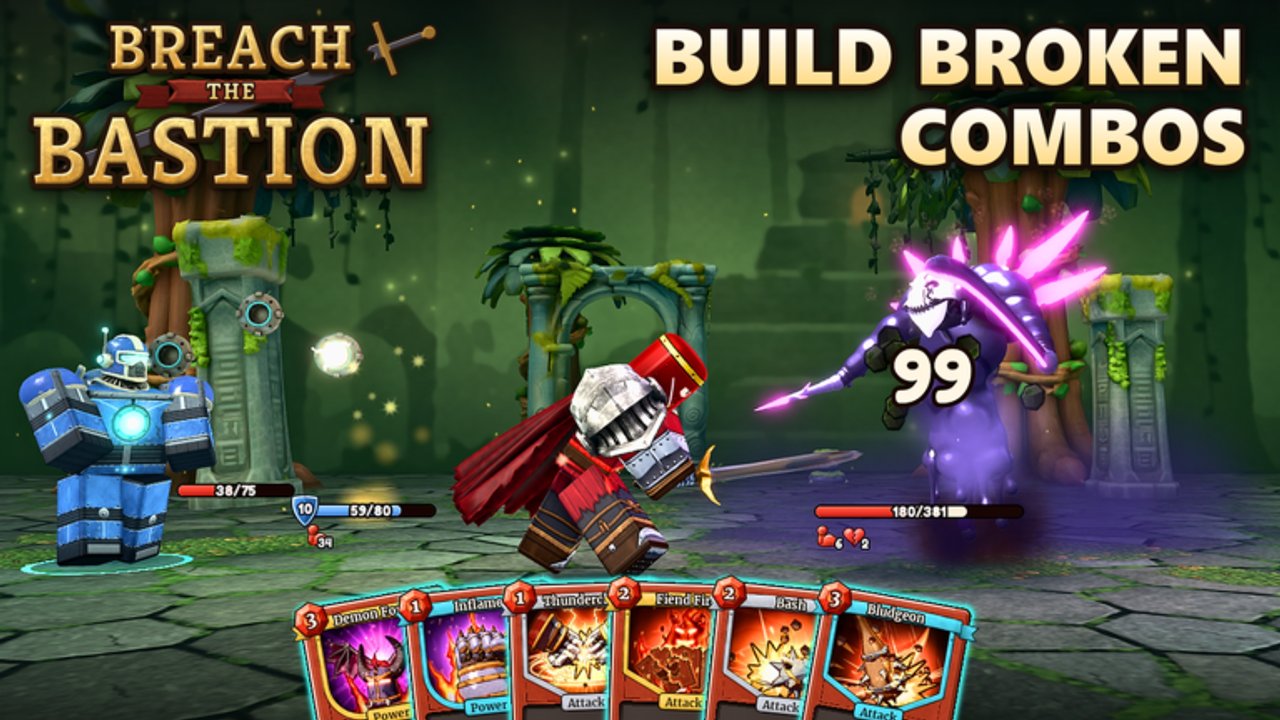
Breach the Bastion: Spire Deck Builder plays like a Roblox cousin of Slay the Spire-style climbs: each run is a fresh deck, a branching map, and a gauntlet of hallway fights, elites, and bosses. Exact UI labels and numeric values can change with patches from Cheesy Games Studios, so treat this page as a mental model—verify energy costs and intents in your live client. For first-hour habits, start with Getting Started; for drafting theory, continue to Deck Building.
The core loop
- Choose a class/hero and enter the Bastion.
- Pick a map path (fights, events, shops, rests, elites).
- Win combats by playing cards with limited energy while managing block against enemy intents.
- Take rewards—cards, gold-like currency, potions, or relics—then move deeper.
- Defeat the act boss, then repeat with higher stakes.
Solo and co-op (up to four players total) share that loop; co-op adds shared path risk and cover tools—see Co-op.
Combat turns
A typical turn looks like this:
- Draw your hand (size can vary by relics and effects).
- Read enemy intents: attack, buff, debuff, or unknown.
- Spend energy on cards that either reduce incoming damage (block), remove threats (damage/control), or set up future turns (draw, brew, stance).
- End turn; leftover energy usually empties; block often clears unless a relic or card says otherwise.
If specifics differ in a patch (retained block, energy carry-over), trust the tooltip over this wiki. The skill that never changes: intent first, greed second.
Energy
Energy is your action budget. Costly power cards feel strong but strand you if you cannot also block. Early decks should mix low-cost plays so you can always answer a heavy hit. Relics that grant extra energy or discount cards dramatically raise your ceiling—evaluate them with the framework on Relics Tier List.
Block
Block absorbs attack damage for the turn. Overkill block is rarely wasted if it keeps you above potion territory. In co-op, cover abilities such as Brewer’s Stand Guard can protect an ally or act as a solo block tool—practice timing on Brewer Class.
Damage and status
Damage cards finish fights; statuses (poison-like spores, fragile, strength swings) change math across turns. Brewer packages like Spores, Spore Burst, and Steam Burst show how DoT/AoE plus regen can replace raw single-target spam. Still, hallway efficiency matters—long fights burn potions you wanted for elites.
The path map
Between fights you choose nodes. While iconography may match Spire conventions, always hover/read in-game:
- Hallway fights: safest XP/card income; good for testing new cards.
- Elites: higher risk, better relics/loot; only contest when your deck answers the elite’s pattern—see Beat Elites.
- Events (?): high variance; can make or break thin decks.
- Shops: removals, potions, relics, cards—buy thinning and keys first.
- Rest sites: heal or upgrade; heal when a mistimed elite would end the run.
- Boss: act closer; enter with potions and a clear win condition.
Pathing tip: line up a rest before a planned elite, and avoid stacking unknown events when HP is already low.
Rewards after combat
Card picks should serve your one-sentence archetype. Gold and potions are flexible; relics define the run. If a reward does not support your plan, skip it—Getting Started hammers this for a reason. Cross-check class strength vibes on Classes Tier List and the Tier List Hub, remembering those pages are community opinion for November 2026.
Shop and rest mental model
Think in priorities, not shopping lists:
Shop priority
- Remove dead starter cards if the deck feels clogged.
- Buy the relic that unlocks your archetype (energy, draw, brew enablers).
- Stock one panic potion for elites/bosses.
- Only then buy speculative rares.
Rest priority
- Heal if the next elite/boss can lethal you through your average block turn.
- Upgrade the card you play every fight (core strike package, Alembic-style engine, key defend).
- Avoid upgrading cute one-ofs you rarely draw.
Potions and consumables
Potions are run savers, not hallway snacks. Hold them for elites, bosses, or “I misread intent” emergencies. Timing examples live on Beat Elites. In co-op, call potion usage in chat so two players do not both panic-pop the same turn.
Brewer-flavored systems (Nov 2026)
If you play Brewer, expect cauldron/brew fantasy: Alembic turning brew into block, Stir and Quick Draw aiding setup, Glass Shards / Shell Breaker for offense, Steam Engine for engines, and relics like Happy Flower or Ember Strike (region shifts near the cauldron). Watch the embedded gameplay on the Brewer guide page and skim Brewer Update.
Putting it together in a sample turn
Enemy telegraphs a heavy hit. You have mixed energy. Play your cheapest block or Stand Guard first if lethal is possible, then spend remaining energy on damage that shortens the fight. If you are brewing, set up Alembic/Spores only when you will survive the swing. End turn with a plan for the redraw.
Where to go next
- Drafting discipline: Deck Building
- Elite routing: Beat Elites
- Party play: Co-op
- Freebies: Codes · How to Redeem
- Rankings: Tier List Hub · Players Hub
- Quality-of-life experiments: Scripts / Auto Combat (risk awareness required)
- Session prep: Run Checklist · Tools · Wiki · Updates
Master the turn loop before chasing every rare. The Bastion punishes confusion more than low rarity.
Frequently Asked Questions
Quick answers to the most common questions.
Is energy the same every turn?
Base energy is usually fixed per turn unless relics, cards, or statuses change it. Always read your current energy display in-run.
Does block carry between turns?
In most Spire-like designs block clears at turn end unless an effect says otherwise. Confirm with tooltips if a card or relic grants retained block.
When should I rest versus shop?
Rest when HP cannot survive the next elite or boss swing. Shop when removals or a key relic will raise your win rate more than raw HP.
How is co-op combat different?
Intents and shared path risk hit the whole party. Cover tools and clear callouts matter—see the Co-op guide.
Where are codes and patch notes?
Codes hub for rewards, Updates hub for patches, Brewer Update for the November 2026 class launch.